1. Introduction
Are you investing your holiday marketing budget where customers are actually searching, or simply following the holiday calendar? Many Quick Service Restaurants (QSRs) increase promotions, staffing, and inventory during festive periods, assuming holidays naturally generate higher demand. However, today’s customers choose restaurants based on what they discover online rather than the date on the calendar.
Before visiting a restaurant, consumers typically search on Google Search or Google Maps, compare nearby options, browse menus, read reviews, verify opening hours, and often call the restaurant. According to Google, Business Profiles help customers discover businesses and make informed decisions by displaying menus, reviews, photos, contact details, and directions. Every search, menu view, phone call, and direction request provides valuable insight into customer intent.
For multi-location restaurant brands, relying solely on a national holiday calendar is no longer sufficient. Customer demand varies across cities, restaurant categories, and local celebrations. As a result, Google Business Profile (GBP) optimisation, Local SEO, and customer behaviour analysis have become essential for making smarter marketing, staffing, and operational decisions.
2. Holiday Demand Isn’t Always What You Expect
2.1 Different Holidays Create Different Customer Behaviour
One of the biggest challenges in QSR marketing, restaurant marketing, and multi-location restaurant management is assuming that every holiday creates the same level of customer demand. While holiday calendars often drive marketing plans, customer behaviour is influenced far more by local culture, regional celebrations, shopping patterns, travel behaviour, and purchase intent than by the holiday itself. Some festivals encourage people to visit shopping centres, entertainment districts, and food courts, while others keep families at home preparing traditional meals. Likewise, holidays may increase demand in tourist destinations while reducing traffic in business districts. These differences make a one-size-fits-all marketing strategy ineffective for restaurant chains operating across multiple locations. Rather than relying on assumptions, successful QSR brands analyse customer behaviour to allocate marketing budgets, optimise staffing, improve inventory planning, and enhance customer experiences. Understanding local demand has become an essential part of restaurant marketing and Google Business Profile optimisation.
2.2 Customer Intent Begins Before the Restaurant Visit
The customer journey starts long before someone places an order. Most consumers first search on Google Search or Google Maps, compare nearby restaurants, browse menus, check reviews, verify opening hours, or call the outlet before deciding where to eat.
Google states that Business Profiles help customers make faster purchasing decisions by presenting essential information directly within search results. These interactions provide valuable customer intent signals that allow restaurants to understand demand before customers even arrive.
Instead of measuring success solely through footfall or sales, forward-thinking QSR brands monitor Google Business Profile insights, Google Maps visibility, call activity, menu engagement, and direction requests to understand changing customer behaviour throughout holidays, weekends, and seasonal events.
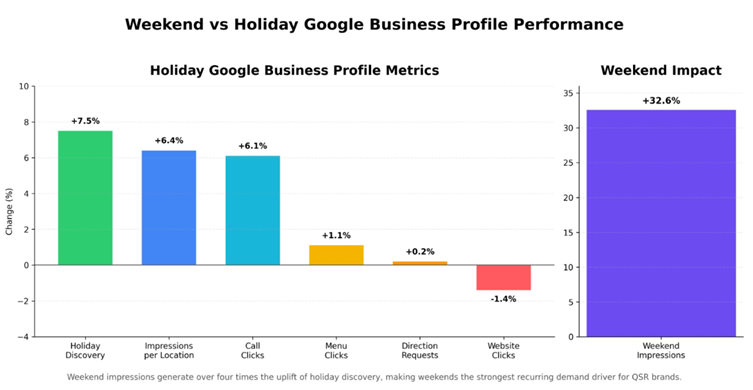
Chart 1: Weekend vs Holiday Google Business Profile Performance
The chart compares customer interactions during holidays and weekends using Google Business Profile metrics. Holiday periods increased discovery (+7.5%), impressions per location (+6.4%), and call clicks (+6.1%), while menu clicks (+1.1%) and direction requests (+0.2%) showed only modest growth. In contrast, weekend impressions increased by 32.6%, over four times higher than holiday discovery, highlighting weekends as the strongest recurring opportunity for QSR brands to improve visibility, customer engagement, and operational planning.
2.3 Why Google Business Profile Is Becoming a Competitive Advantage
Every interaction within a Google Business Profile provides actionable business intelligence. Searches reflect awareness, menu views indicate purchase interest, phone calls demonstrate immediate buying intent, direction requests signal planned visits, and reviews reveal customer satisfaction.
Rather than relying on broad assumptions, restaurant brands should analyse these signals at each location to identify demand patterns, improve Google Maps visibility, strengthen Local SEO, and optimise operational planning. Businesses that actively manage their Google Business Profiles are better positioned to respond to changing customer behaviour and improve marketing effectiveness.
3. Category Matters More Than the Holiday Itself
3.1 Not Every Restaurant Category Benefits Equally
Holiday demand varies significantly across restaurant categories because customers choose different dining experiences depending on the occasion. Celebration-based outings often favour food courts, cafés, or dessert outlets, while everyday meal categories generally experience more stable demand.
Similarly, customers visiting shopping centres, tourist attractions, or entertainment districts have different purchase intentions from commuters seeking convenience. These behavioural differences directly influence Google Search visibility, Google Maps discovery, and restaurant performance.
For multi-location restaurant brands, recognising category-specific demand patterns improves marketing efficiency, staffing, inventory planning, and promotional performance.
3.2 Build Category-Specific Marketing Strategies
Instead of applying identical campaigns across every outlet, QSR brands should tailor marketing strategies according to customer intent and local demand. Effective approaches include seasonal campaigns, store-specific offers, hyperlocal promotions, Google Posts, updated holiday hours, promotional menus, and high-quality listing images.
Category-specific planning may include developing seasonal campaigns, introducing limited-time menus, creating store-specific offers, running hyperlocal promotions, optimising Google Posts, adjusting inventory levels, and preparing staff according to expected demand. Similarly, businesses should update Google Business Profiles with accurate holiday hours, promotional content, menu changes, and high-quality images to maximise local visibility during peak periods.
Businesses should also optimise Local SEO using location-specific keywords, ensuring restaurants appear for the most relevant searches during peak periods. This targeted approach increases visibility while improving marketing return on investment.
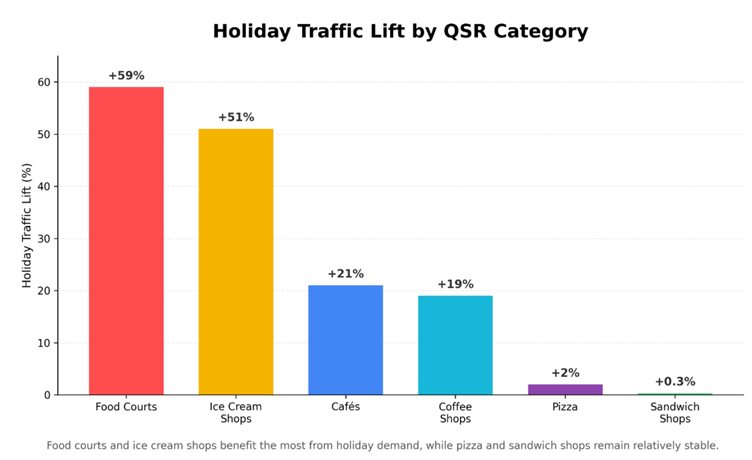
Chart 2: Holiday Traffic Lift by QSR Category
The chart demonstrates that holiday demand differs considerably across restaurant categories. Food courts (+59%) and ice cream shops (+51%) experienced the strongest traffic growth, followed by cafés (+21%) and coffee shops (+19%). In comparison, pizza (+2%) and sandwich shops (+0.3%) recorded minimal increases. These findings show that holiday marketing, staffing, and inventory decisions should be based on category-specific customer behaviour rather than applying the same strategy across every QSR format.
3.3 Every Restaurant Location Behaves Differently
One of the greatest advantages of Google Business Profile analytics is the ability to evaluate each restaurant individually. Even outlets under the same brand experience different customer behaviour because they serve unique catchment areas with varying demographics, purchasing habits, competition, and seasonal demand.
For example, city-centre restaurants may attract office workers during weekdays and shoppers on weekends, while suburban outlets primarily serve families. Similarly, restaurants in shopping malls, airports, transit hubs, or tourist destinations each experience different search patterns and customer interactions.
Instead of applying identical staffing, promotional calendars, or advertising budgets across every outlet, QSR brands should use Google Business Profile insights, Local SEO, and location-level analytics to develop targeted strategies that maximise visibility, improve operational efficiency, and capture local demand more effectively.
4. The Holidays That Actually Matter for Your Restaurant
4.1 Stop Treating Every Holiday as a Peak Sales Opportunity
Not every holiday creates the same opportunity for Quick Service Restaurants (QSRs). While many brands increase marketing budgets, staffing, and inventory for every festive occasion, customer behaviour often varies significantly. Some holidays encourage shopping, travel, and social gatherings that increase restaurant visits, whereas others revolve around family celebrations and home-cooked meals, reducing demand for eating out.
For multi-location restaurant brands, these differences become even more important because holiday performance varies across cities and regions. A festival that drives strong restaurant traffic in one market may generate little demand in another. Instead of relying on a single national holiday calendar, businesses should evaluate each occasion using Google Business Profile Insights, Google Maps interactions, and Local SEO data to understand actual customer behaviour before making operational decisions.
4.2 Build Regional Holiday Strategies
Successful restaurant marketing recognises that customer behaviour is local. Rather than launching identical campaigns across every outlet, brands should develop regional holiday calendars based on historical demand, local celebrations, tourism, shopping patterns, and search behaviour.
This includes updating Google Business Profiles with accurate holiday hours, promotional offers, Google Posts, menus, and staffing schedules while aligning inventory planning with local demand. Monitoring customer searches, reviews, phone calls, and direction requests helps businesses identify recurring seasonal trends, allowing proactive planning instead of reacting once demand has already arrived.
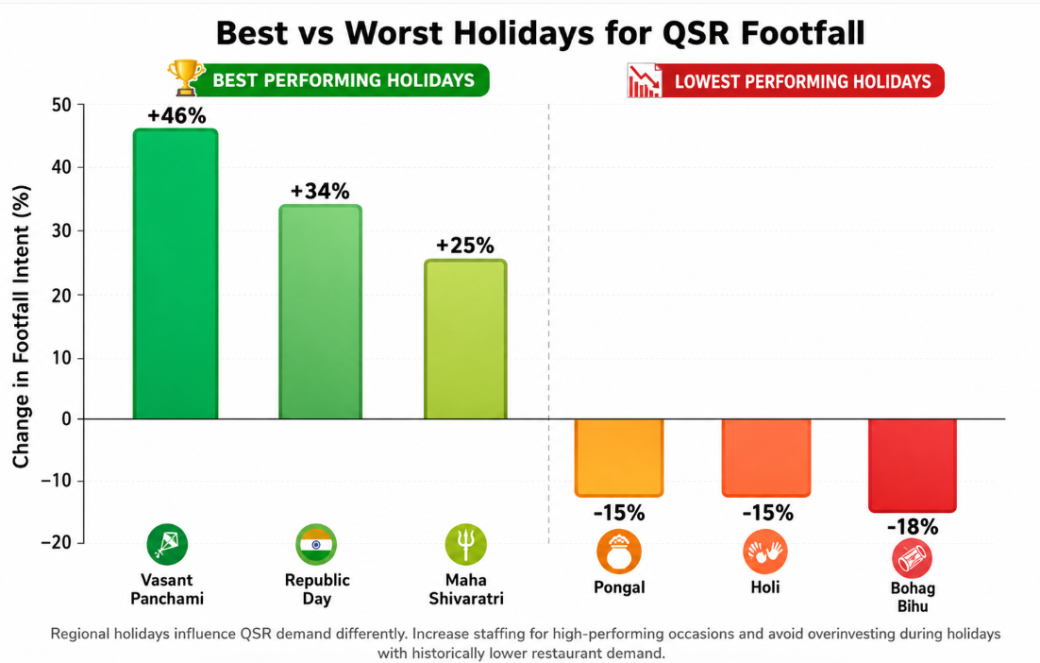
Chart 3: Best vs Worst Holidays for QSR Footfall
The chart highlights clear differences in customer demand across holidays. Vasant Panchami (+46%), Republic Day (+34%), and Maha Shivaratri (+25%) generated the highest increase in restaurant footfall, whereas Pongal (-15%), Holi (-15%), and Bohag Bihu (-18%) experienced lower demand. These findings demonstrate that QSR brands should adopt region-specific marketing, staffing, and inventory strategies rather than assuming every holiday creates equal business opportunities.
5. Google Business Profile Is Your Most Powerful Holiday Marketing Tool
5.1 Customers Discover Restaurants Before They Visit
Today’s customer journey begins online. Before choosing where to eat, people search Google Search and Google Maps to compare restaurants, browse menus, check reviews, verify opening hours, view photos, or request directions. A complete and accurate Google Business Profile (GBP) therefore becomes one of the most influential digital assets for attracting local customers.
Businesses with well-maintained profiles improve customer confidence while strengthening Google Maps visibility, Local SEO, and overall restaurant discoverability. If customers cannot quickly find reliable information, they are likely to choose a competing restaurant appearing higher in local search results.
5.2 Every Customer Interaction Reveals Purchase Intent
Successful restaurant operators optimise every stage of the customer journey rather than focusing only on footfall. Searches, menu views, reviews, phone calls, website visits, and direction requests each represent different stages of customer intent.
Keeping business hours, menus, contact details, promotional offers, and images updated helps customers make faster decisions while improving conversion from Google Search and Google Maps. At the same time, responding to customer reviews and maintaining fresh content strengthens online reputation and improves local search performance.
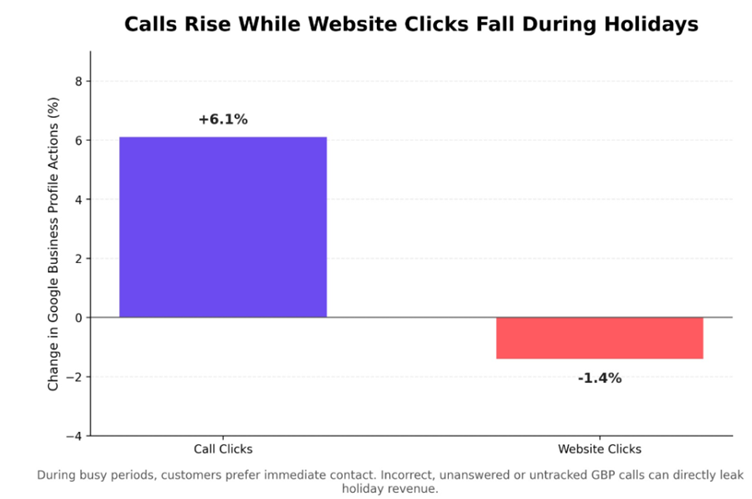
Chart 4: Calls Rise While Website Clicks Fall During Holidays
The chart shows that call clicks increased by 6.1%, while website clicks declined by 1.4% during holiday periods. This indicates customers preferred immediate phone contact before visiting restaurants, making accurate, answered, and trackable phone numbers within Google Business Profiles essential for preventing lost sales opportunities during peak demand periods.
6. Strategies Multi-Location Restaurant Brands Can Use to Win Local Search
1. Optimise Every Google Business Profile for Local Search
Every Google Business Profile acts as a digital storefront for a restaurant location. Accurate and complete profiles improve visibility in Google Search and Google Maps, strengthen customer trust, and support better Local SEO performance.
How to do it: Step by step
- Audit every restaurant profile to identify missing information, incorrect details, duplicate listings, or inconsistent branding across locations.
- Update essential business information, including address, phone number, website, business hours, holiday timings, delivery options, and service areas.
- Select the correct categories and attributes so Google clearly understands the restaurant type, services, dining options, and customer facilities.
- Add high-quality photos, menus, and location-specific descriptions to make each profile more useful and attractive to nearby customers.
- Review profiles regularly to maintain accuracy, respond to changes, and ensure every outlet remains fully optimised.
RightChoice.ai uses Manage Multiple Listings to centralise profile updates across all restaurant locations. Profile Strength & Audit identifies missing details and optimisation gaps, while Profile Protection helps prevent unauthorised changes, inaccurate updates, and profile-related issues that may reduce local visibility.
2. Improve Local Keyword Visibility for Every Restaurant Location
Customers use different search terms depending on their location, dining preferences, and immediate needs. A location-specific keyword strategy helps each outlet appear for relevant searches such as “pizza near me,” “family restaurant nearby,” or “late-night food in Kolkata.”
How to do it: Step by step
- Identify the main services and menu categories customers may search for around each restaurant location.
- Research local keywords using neighbourhood names, cuisine types, meal occasions, menu items, and high-intent phrases.
- Group keywords by priority, separating primary keywords, supporting keywords, and seasonal or promotional search terms.
- Add keywords naturally to business descriptions, Google Posts, menus, website pages, and location-specific content.
- Track rankings regularly and update the keyword strategy when customer search behaviour or local competition changes.
RightChoice.AI’s Local Keywords Ranker identifies relevant local keywords, search volumes, ranking positions, and keyword importance for each outlet. Geo Grid Tracker then maps search visibility across nearby areas, showing where the restaurant performs strongly and where further Local SEO optimisation is required.
3. Build Trust Through Reviews and Reputation Management
Reviews influence customer decisions, restaurant credibility, and local search performance. Multi-location brands need a structured process to collect, monitor, and respond to reviews across every outlet.
How to do it: Step by step
- Create a simple review collection process using QR codes, receipts, table cards, SMS messages, or post-visit communication.
- Encourage genuine feedback from satisfied customers without offering misleading incentives or pressuring them to leave positive ratings.
- Monitor new reviews daily across all restaurant locations so important feedback is not ignored.
- Respond professionally and personally to positive, neutral, and negative reviews using a consistent brand tone.
- Analyse recurring feedback themes and share them with operations teams to improve food quality, service speed, cleanliness, and customer experience.
AI Review Auto Reply creates specific, personalised responses for customer reviews, helping brands maintain fast and consistent engagement across multiple locations. Rightchoice.AI’s AI Sentiment Analysis identifies recurring complaints, positive themes, and customer satisfaction patterns, enabling managers to turn review data into practical operational improvements.
4. Keep Every Google Business Profile Active with Fresh Content
Regular content updates show customers that the restaurant is active, relevant, and responsive. Fresh Google Posts, images, menu updates, and seasonal information can improve engagement and support local visibility.
How to do it: Step by step
- Create a monthly content calendar covering new menu items, festivals, weekend offers, local events, and limited-time promotions.
- Prepare location-specific content rather than publishing the same generic message across every restaurant outlet.
- Write keyword-optimised Google Posts with clear headlines, relevant offers, strong calls to action, and accurate information.
- Upload fresh photos and menu updates to showcase new dishes, restaurant ambience, festive decorations, and customer experiences.
- Schedule posts in advance and review their performance to understand which topics generate the most engagement.
AI Content Generation creates keyword-optimised content for Google Posts, local campaigns, and restaurant promotions. RightChoice.AI’s Local Post Scheduler helps brands plan, customise, and publish posts across multiple profiles, keeping each location active without requiring repetitive manual work.
5. Monitor Competitors and Strengthen Local Market Position
Local search performance depends partly on how nearby competitors manage their profiles, reviews, rankings, content, and customer engagement. Regular competitor monitoring helps restaurants identify gaps and new growth opportunities.
How to do it: Step by step
- Identify the main competitors within each restaurant location’s local catchment area.
- Compare ratings, review volumes, profile activity, offers, and local rankings against those competing restaurants.
- Identify competitor strengths, such as stronger review growth, better content, higher ratings, or wider local visibility.
- Find market gaps where your restaurant can differentiate through menu offerings, service quality, promotions, or customer experience.
- Adjust local marketing strategies and track whether the changes improve ranking, engagement, and customer acquisition.
RightChoice.AI’s Competitor Tracker allows restaurant brands to monitor nearby competitors, compare performance, and identify ranking or reputation gaps. Business Performance Data brings these insights together with outlet-level metrics, helping decision-makers understand where each restaurant is outperforming or falling behind its local market.\
7. Conclusion
Holiday success in the Quick Service Restaurant (QSR) industry is no longer determined by festive calendars alone. Customer demand varies across holidays, restaurant categories, locations, and purchasing occasions. Businesses that continue applying identical marketing campaigns across every outlet risk inefficient spending and missed opportunities.
Instead, successful QSR brands use Google Business Profile, Google Maps, and Local SEO insights to understand customer behaviour before demand occurs. Monitoring searches, reviews, menu views, phone calls, and direction requests enables more informed decisions around marketing, staffing, inventory, and operations.
For multi-location restaurant brands, adopting a location-specific strategy supported by RightChoice.ai helps transform customer data into actionable business intelligence. By optimising Google Business Profiles, improving local visibility, and continuously analysing customer behaviour, restaurants can maximise recurring demand, strengthen customer engagement, and achieve sustainable growth throughout the year.