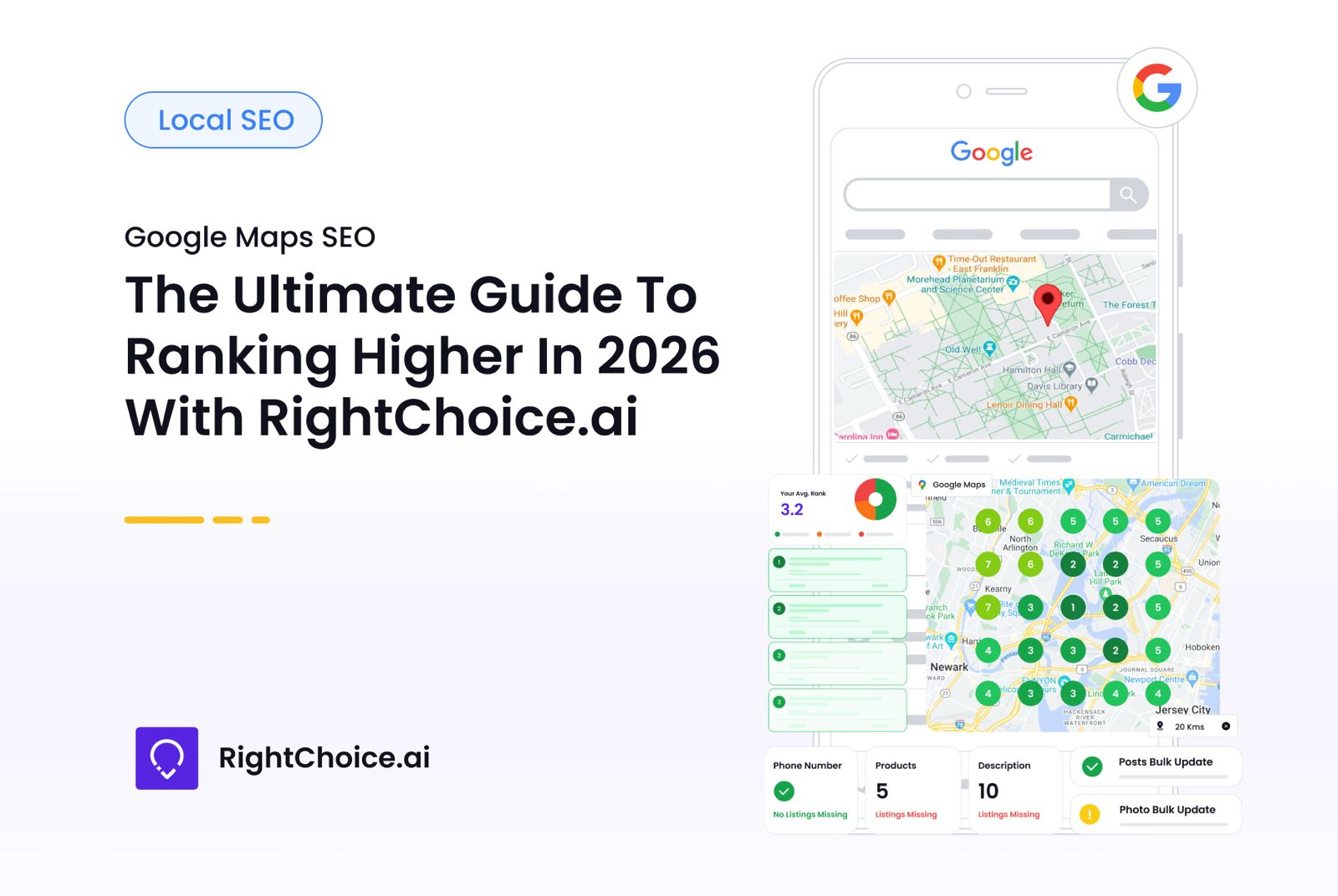
1. Introduction: The Growing Importance of Google Maps SEO
Local search has fundamentally transformed how customers discover and evaluate nearby businesses. When users search for services such as restaurants, healthcare providers, retail stores, or repair services, the results often highlight the Google Maps local pack, making Google Maps SEO a critical factor for business visibility. According to Google, 76% of people who search for a business nearby on their smartphone visit that business within a day, demonstrating the powerful influence of local search and Google Business Profile optimization on real-world customer actions.
In this evolving search landscape, optimizing for Google Maps SEO, local SEO for Google Maps, and Google Business Profile ranking has become essential for businesses that want to attract local customers and maintain competitive visibility. Google Maps listings now function as digital storefronts, displaying key business information such as reviews, ratings, operating hours, photos, and directions. These elements help customers quickly compare options and choose businesses they trust.
RightChoice.AI support these efforts by helping businesses streamline listing management, strengthen local SEO signals, and improve their overall Google Maps ranking performance.
2. What is Google Maps SEO?
Google Maps SEO refers to the process of optimizing a business’s Google Business Profile (GBP) and related local signals to improve visibility in Google Maps search results and the local 3-pack. When users search for services using location-based queries such as “best dentist near me,” “restaurants in downtown Chicago,” or “car repair near me,” Google displays a map section with a small group of top business listings. This area, commonly called the local pack, is one of the most valuable positions in local search because it captures the majority of user attention and clicks.
Unlike traditional search engine optimization (SEO), which focuses on improving a website’s ranking in organic search results, Google Maps SEO concentrates on optimizing local business listings so that they appear prominently in map-based search queries. This involves improving several key ranking signals including business relevance, proximity to the searcher, and overall prominence.
For businesses targeting local customers, strong local SEO for Google Maps can significantly increase calls, direction requests, and website visits. Listings that appear at the top of map results often receive the highest share of user interactions because they provide immediate information such as ratings, contact details, and location directions.
3. Why Businesses Must Prioritize Google Maps SEO in 2026
The Rapid Growth of Local Search Behavior
Local search has become one of the most influential drivers of customer discovery. Consumers increasingly rely on Google Maps and location-based search results to find nearby services, compare options, and make quick purchasing decisions. Because of this trend, Google Maps SEO and Google Business Profile optimization now play a central role in local digital marketing strategies. Businesses that rank within the Google Maps local pack gain significantly higher visibility, making it easier for potential customers to discover and engage with their services.
The Influence of Reviews and Engagement Signals
Customer reviews, ratings, photos, and interactions strongly influence both Google Maps rankings and consumer trust. Listings with higher review volume, consistent responses, and positive ratings tend to attract more clicks, calls, and direction requests. These engagement signals indicate to Google that a business is reputable and actively serving customers. As a result, managing Google reviews, customer feedback, and listing engagement has become an essential part of maintaining strong local search visibility.
Challenges for Multi-Location Businesses
While Google Maps SEO is important for all businesses, it becomes significantly more complex for organizations operating across multiple locations. Common challenges include duplicate listings, inconsistent NAP (Name–Address–Phone) data, outdated business hours, and incorrect category selection. Even small inconsistencies can weaken ranking signals and reduce visibility in local search results. To overcome these challenges, businesses often implement centralized listing management solutions such as RightChoice.AI, which help maintain accurate business information, streamline optimization across locations, and strengthen overall local SEO performance in Google Maps.
4. How Google Maps Ranking Works (Updated for 2026)
Understanding how Google Maps ranking factors work is essential for businesses aiming to improve their Google Maps SEO and Google Business Profile visibility. Google’s local search algorithm evaluates several signals when deciding which businesses appear in the local pack and map search results. Among these signals, three primary factors play the most significant role: relevance, distance, and prominence.
Relevance
Relevance refers to how closely a Google Business Profile listing matches the intent of a user’s search query. Google evaluates multiple elements within a business profile to determine this alignment, including business categories, services offered, business descriptions, and keywords associated with the listing. Listings that clearly describe their services and include relevant local keywords are more likely to appear in Google Maps search results. For example, a listing optimized for “family dentist in Austin” provides stronger relevance signals than a generic “dentist” description.
Distance
Distance measures how close a business location is to the person conducting the search. Google uses the searcher’s device location or the location specified in the search query to determine proximity. Businesses that are geographically closer to the user are generally prioritized in Google Maps rankings, particularly for “near me” searches. Accurate address information and properly configured service areas are therefore essential for improving local SEO visibility in Google Maps.
Prominence
Prominence represents the overall authority and reputation of a business. Google evaluates factors such as review volume, review quality, customer engagement, brand reputation, and online mentions across the web. Businesses with strong reputations and active engagement signals often rank higher because they demonstrate trustworthiness and popularity. Maintaining positive reviews, responding to customer feedback, and ensuring consistent listing information all contribute to stronger Google Maps SEO performance.
5. Essential Google Maps SEO Strategies for Multi-Location Businesses
5.1 Maintain NAP Consistency Across All Listings
Maintaining consistent NAP (Name, Address, Phone number) information across all online listings is one of the most critical factors in Google Maps SEO. When business details vary across directories, websites, and local listings, it creates confusion for search engines and customers. This inconsistency weakens trust signals and can reduce a business’s ability to rank in Google Maps results and the local pack. For multi-location organizations, managing accurate contact information across dozens or hundreds of listings can be particularly challenging, making consistency a foundational element of successful local SEO for Google Maps.
To do this:
- Ensure the business name, address, and phone number appear exactly the same across all directories.
- Regularly audit online listings to identify and correct inconsistencies.
- Update business information immediately whenever changes occur.
- Maintain standardized naming formats across all platforms.
RightChoice.AI helps businesses maintain consistent NAP data through its Listings Management and Profile Sync tools, which centralize business information and distribute updates across directories. Its monitoring system also detects inconsistencies across listings, allowing organizations to correct errors quickly and maintain strong Google Maps SEO signals.
5.2 Claim and Verify Google Business Profiles
Claiming and verifying a Google Business Profile (GBP) is a fundamental step in improving Google Maps SEO and local search visibility. Verified listings are more trusted by Google and have greater control over the information displayed to customers.
To do this:
- Search for your business on Google Maps and claim the existing listing.
- Complete the verification process through available methods such as postcard, phone, or email.
- Confirm ownership of each location for multi-location businesses.
- Ensure all listing details are updated immediately after verification.
RightChoice.AI supports scalable listing management through its Google Business Profile Management tools, enabling businesses to oversee multiple locations from a centralized dashboard. The platform simplifies verification tracking and ensures that every location profile is properly managed, improving overall Google Maps SEO optimization.
5.3 Optimize Business Descriptions for Local Relevance
Business descriptions help Google understand what services a business offers and how relevant it is to specific search queries. Generic or identical descriptions across locations often weaken local SEO signals because they fail to reflect location-specific services or keywords. Optimized descriptions that include relevant local search terms can significantly improve visibility in Google Maps rankings and make listings more informative for potential customers.
To do this:
- Write unique descriptions for each location.
- Include location-specific keywords and services.
- Mention nearby neighborhoods or landmarks where appropriate.
- Highlight unique services or specialties offered at each location.
RightChoice.AI assists businesses through its AI-driven Listing Content Optimization tools, which help generate localized descriptions aligned with search intent. The platform ensures that each location maintains relevant, optimized content while keeping messaging consistent across all listings to strengthen Google Maps SEO performance.
5.4 Choose Accurate Primary and Secondary Categories
Business categories are one of the strongest signals used by Google to determine which listings appear in Google Maps search results. Selecting the correct primary category helps Google understand the main service offered by a business, while secondary categories provide additional context about related services. Incorrect or overly broad categories can reduce a listing’s relevance and limit its chances of appearing for targeted searches.
To do this:
- Select a primary category that reflects the business’s main service.
- Add secondary categories to highlight additional offerings.
- Analyze competitor listings to identify commonly used categories.
- Update categories whenever services expand or change.
RightChoice.AI helps businesses refine category strategies through its Listing Optimization and Competitive Insights tools. These tools analyze local search patterns and competitor listings to recommend effective category selections, helping businesses improve Google Maps visibility and local SEO relevance.
5.5 Complete All Listing Information Fields
Fully optimized listings perform better in Google Maps SEO because they provide search engines and customers with detailed business information. Google favors listings that contain comprehensive data, including operating hours, services, website links, attributes, and photos. Incomplete listings may appear less reliable, which can negatively impact both rankings and customer engagement.
To do this:
- Fill out every available field in the Google Business Profile.
- Keep operating hours and holiday schedules updated.
- Add detailed service descriptions and attributes.
- Include accurate website links and contact details.
RightChoice.AI streamlines this process through its centralized Listing Management platform, allowing businesses to update information across multiple locations simultaneously. Its optimization tools ensure that profiles remain complete, accurate, and aligned with Google Maps SEO best practices, helping businesses maintain strong local search visibility.
5.6 Publish Location-Specific Updates and Posts
Publishing regular updates on a Google Business Profile helps signal that a business is active and engaged with its customers. Google tends to prioritize listings that frequently share relevant information because it demonstrates ongoing activity and responsiveness. Posts can highlight promotions, events, product launches, or service announcements, helping businesses maintain visibility while encouraging interaction from potential customers.
To do this:
- Publish updates related to promotions, offers, or announcements.
- Share local events or community activities connected to the location.
- Maintain a consistent posting schedule across listings.
- Use relevant keywords in posts to improve search relevance.
RightChoice.AI supports this through its content publishing and listing activity management tools, which allow businesses to schedule and distribute localized updates across multiple locations while maintaining consistent messaging and stronger Google Maps SEO engagement signals.
5.7 Create Dedicated Location Landing Pages
Dedicated landing pages for each business location help connect website SEO with Google Maps SEO. These pages provide detailed information about each location, including services offered, operating hours, customer reviews, and directions. Businesses with well-structured location pages often perform better in both organic search results and Google Maps rankings.
To do this:
- Create a separate landing page for every business location.
- Include local keywords, services, and directions on each page.
- Add embedded Google Maps and NAP information.
- Link each page to its corresponding Google Business Profile listing.
RightChoice.AI helps businesses align location pages with listings through its local SEO optimization and listing management tools, ensuring consistent data and stronger geographic signals that support Google Maps SEO performance.
5.8 Build Local Backlinks
Backlinks from reputable local sources help strengthen a business’s authority within a specific region. Search engines interpret these links as signals that the business is relevant and trusted within its community. Local backlinks may come from organizations such as community blogs, local news sites, business directories, sponsorship pages, and chambers of commerce. These signals contribute to a business’s overall prominence, which is an important factor in Google Maps SEO rankings.
To do this:
- Partner with local organizations and community groups.
- List the business in reputable local directories.
- Sponsor community events or initiatives that generate mentions.
- Encourage media coverage from local publications.
RightChoice.AI assists businesses through its local SEO analytics and competitive insights tools, helping identify backlink opportunities and monitor authority signals that contribute to stronger Google Maps visibility.
5.9 Implement Local Business Structured Data
Structured data, commonly referred to as schema markup, helps search engines better understand the details of a business and its locations. Local Business schema provides information such as business name, address, phone number, opening hours, and geographic coordinates in a format that search engines can easily interpret. When implemented correctly, structured data strengthens the connection between a website and its Google Business Profile listing, supporting both organic and map-based search visibility.
To do this:
- Add LocalBusiness schema markup to location landing pages.
- Include accurate NAP details, operating hours, and geo-coordinates.
- Ensure each location has unique schema data.
- Test structured data using schema validation tools.
RightChoice.AI helps ensure data consistency across websites and listings through its local SEO optimization and listing synchronization tools, reinforcing structured signals that contribute to improved Google Maps SEO rankings.
5.10 Improve User Engagement Signals
User engagement signals play a significant role in determining Google Maps rankings because they indicate real customer interest in a business. Actions such as calls, website visits, direction requests, and photo views demonstrate that users find the listing relevant and useful. Businesses that consistently generate strong engagement signals are more likely to appear prominently in Google Maps search results.
To do this:
- Add clear calls-to-action such as “Call Now” or “Get Directions.”
- Keep listings updated with fresh photos and posts.
- Encourage customers to interact with the listing through reviews and questions.
- Ensure website links and booking options are easily accessible.
RightChoice.AI enhances engagement tracking through its performance analytics and listing optimization tools, allowing businesses to monitor user interactions across locations and identify strategies that improve Google Maps SEO performance and customer engagement.
5.11 Upload Location-Specific Photos
High-quality photos significantly influence Google Maps SEO performance because they increase user engagement and build trust with potential customers. Listings with authentic images tend to receive more clicks, direction requests, and customer interactions compared to profiles that rely on generic or outdated visuals. Photos also help customers better understand the environment, services, and professionalism of a business location. For multi-location businesses, using location-specific images ensures that each listing accurately represents the particular branch rather than using the same visuals across all profiles.
To do this:
- Upload real photos of storefronts, interiors, teams, and services.
- Regularly update images to reflect current branding and operations.
- Encourage customers to upload their own photos.
- Ensure every location has unique visual content.
RightChoice.AI supports this through its content management and listing optimization tools, enabling businesses to coordinate visual updates across multiple locations while maintaining consistent branding and stronger Google Maps engagement signals.
5.12 Manage Reviews Across Locations
Customer reviews are one of the most influential ranking signals in Google Maps SEO and local search visibility. Reviews help Google evaluate the credibility and popularity of a business, while also influencing potential customers’ decisions. Listings with higher review volumes, positive ratings, and active responses tend to rank higher and attract more engagement. For multi-location businesses, managing reviews at scale can be difficult because each location generates its own feedback and reputation signals.
To do this:
- Encourage customers to leave reviews after completing a service.
- Respond to all reviews professionally and promptly.
- Address negative feedback constructively to demonstrate accountability.
- Monitor review trends for each business location.
RightChoice.AI simplifies reputation management through its review monitoring, automated request, and sentiment analysis tools, allowing businesses to manage customer feedback across locations while strengthening their Google Maps SEO authority and trust signals.
5.13 Add Business Attributes
Business attributes provide additional information that helps customers understand specific features of a business. These attributes can include accessibility options, amenities, payment methods, or operational details such as “open 24 hours.” Adding relevant attributes improves both customer experience and Google Maps SEO relevance, as Google uses this information to match listings with specific search filters and user preferences.
To do this:
- Add all applicable attributes within the Google Business Profile dashboard.
- Include accessibility, amenities, and service options where relevant.
- Regularly review attributes when Google introduces new options.
- Ensure attributes accurately reflect each location’s services.
RightChoice.AI helps businesses identify missing attributes through its listing optimization tools, which analyze profile completeness and recommend updates. This ensures that business listings remain comprehensive and competitive in Google Maps search results.
5.14 Embed Google Maps on Location Pages
Embedding Google Maps directly on a business’s website strengthens the connection between the company’s website and its Google Business Profile listing. This integration reinforces geographic signals for search engines while improving the user experience for customers who want to find directions or confirm the location of a business. Embedding maps also helps increase engagement metrics such as time spent on page and direction requests, which indirectly support Google Maps SEO performance.
To do this:
- Embed a Google Map on each location-specific landing page.
- Display NAP information next to the embedded map.
- Add clear calls-to-action such as “Get Directions.”
- Link the map to the official Google Business Profile listing.
RightChoice.AI helps businesses align their website and listings through local SEO optimization tools, ensuring that location pages, contact information, and Google Maps listings remain synchronized for stronger local search visibility.
6. Scalable Google Maps SEO Management with RightChoice.AI
Managing Google Maps SEO for multiple business locations can be complex and time-consuming. Businesses must continuously maintain accurate listings, respond to reviews, monitor engagement signals, and ensure that each location is properly optimized for local search. Without a structured approach, inconsistencies in listing data, outdated information, or missed customer feedback can weaken Google Maps rankings and local SEO performance. For organizations operating dozens or even hundreds of locations, centralized management becomes essential to maintain consistent visibility across markets.
Platforms such as RightChoice.AI are designed to simplify and scale Google Business Profile optimization while ensuring that businesses maintain strong local search signals across all locations.
Centralized Listing Management:
RightChoice.AI enables businesses to manage business information from a single dashboard. Core details such as Name, Address, Phone number, business hours, categories, and services can be updated centrally and synchronized across listings. This ensures consistency across platforms and strengthens Google Maps SEO signals.
Review and Reputation Management:
Customer reviews play a significant role in determining local search visibility. RightChoice.AI provides tools that help businesses monitor reviews across locations, encourage customer feedback, and maintain consistent engagement with customers. This improves reputation signals that influence Google Maps rankings.
Local SEO Insights and Performance Analytics:
Understanding how each location performs in local search is critical for ongoing optimization. RightChoice.AI provides performance tracking tools that analyze listing engagement, review trends, and visibility metrics. These insights help businesses identify optimization opportunities and refine their Google Maps SEO strategy across locations.
7. Rank Higher on Google with RightChoice.AI
For multi-location businesses, strong Google Maps SEO depends on maintaining consistent business information, accurate listings, and continuous performance monitoring across every location. Effective local SEO for Google Maps requires updated Google Business Profiles, active review management, optimized business categories, and clear insights into what influences visibility at the location level.
To answer the question “how to rank higher on Google Maps,” businesses must treat Google Maps optimization and local SEO as a unified strategy rather than separate efforts. When listing data, customer reviews, engagement signals, and local search optimization are managed together, organizations can build stronger local authority and maintain consistent visibility across markets.
Many organizations streamline Google Maps SEO management by using platforms such as RightChoice.AI, which centralize listing management, review monitoring, and performance analytics in one place. This approach helps businesses maintain accurate data across locations, identify optimization opportunities early, and apply proven strategies to improve their Google Maps rankings.
By combining structured listing optimization with ongoing performance insights, businesses can strengthen their Google Business Profile visibility, attract more local customers, and maintain a competitive presence in local search results.